

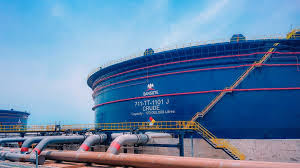
Nigeria’s oil industry is once again at the centre of national attention following reports that the giant Dangote Refinery has taken legal action against the Federal Government over the continued issuance of petrol import licences to fuel marketers. The development has triggered intense debate among industry stakeholders, economists, petroleum marketers, and ordinary Nigerians who expected the refinery to mark the beginning of a new era of energy independence for the country.
The dispute is not just another courtroom battle. Many experts believe it represents a defining moment in Nigeria’s long and troubled petroleum history — one that could determine whether the country truly breaks away from decades of dependence on imported fuel or remains trapped in the same cycle that has drained public finances and weakened the naira for years.
At the heart of the controversy lies a simple but powerful question: if Nigeria now has one of the largest refineries in the world operating within its borders, why should the country still import petrol?
For millions of Nigerians, that question goes beyond business competition. It touches daily life, transportation costs, food prices, inflation, employment opportunities, and even national pride.
The Refinery Nigerians Waited Decades For
The launch of the Dangote Refinery was seen as a historic achievement not only for Nigeria but for the entire African continent. Built at enormous cost and located in the Lekki Free Trade Zone in Lagos, the refinery was designed to process hundreds of thousands of barrels of crude oil daily, making it one of the biggest single-train refineries in the world.
For decades, Nigeria carried the embarrassing reputation of being Africa’s largest crude oil producer while still importing most of its refined petroleum products. Despite having state-owned refineries in Port Harcourt, Warri, and Kaduna, poor maintenance, corruption allegations, pipeline vandalism, and operational inefficiencies left the country heavily dependent on foreign fuel supplies.
The consequences were severe.
Billions of dollars were spent yearly importing petrol. The government repeatedly struggled with subsidy payments. Fuel scarcity became common. Long queues at filling stations frustrated citizens, while rising fuel prices worsened inflation and poverty.
When the Dangote Refinery project was announced years ago, many Nigerians saw it as the answer to these problems. Expectations were massive. Citizens hoped local refining would reduce fuel importation, strengthen the naira, create thousands of jobs, and eventually stabilise petrol prices.
Now, with the refinery operational, many people are wondering why fuel imports continue at such significant levels.
Why Dangote Refinery Is Challenging Import Licences
Reports indicate that the refinery’s legal challenge is focused on the Federal Government’s decision to continue approving licences for the importation of Premium Motor Spirit (PMS), otherwise known as petrol.
From the refinery’s perspective, allowing large-scale fuel importation while domestic refining capacity is expanding may undermine local investment and weaken confidence in Nigeria’s industrial future.
Industry analysts believe the company may be arguing that continued imports create unfair competition, especially if imported products enjoy pricing advantages linked to foreign supply chains, tax structures, or foreign exchange arrangements.
Some supporters of the refinery insist that Nigeria should prioritise local production before relying on imported petrol. They argue that protecting domestic refining could help Nigeria conserve foreign exchange reserves, strengthen local industries, and reduce external economic pressure.
Others believe the refinery’s position is understandable considering the enormous private investment committed to the project. Building a refinery of that scale required billions of dollars, years of planning, international financing, engineering expertise, and huge infrastructure commitments.
To many observers, the question is straightforward: if local refineries can meet domestic demand, should imported fuel still dominate the market?
.jfif "Fresh Oil Sector Crisis: Dangote Refinery Battles FG Over Fuel Import Licences")
Marketers Defend Fuel Importation
However, fuel marketers and importers see the issue differently.
Many operators in the downstream sector argue that import licences remain necessary because the market must stay competitive. According to them, relying entirely on one refinery could create supply risks and pricing concerns if alternative sources are removed.
Some marketers fear that restricting imports could eventually lead to monopoly-like conditions where one major supplier gains excessive control over pricing and distribution.
Others argue that Nigeria’s fuel demand remains extremely high and that the country still requires additional supply sources to avoid shortages. They insist that market liberalisation encourages efficiency, competition, and price balance.
The debate has therefore divided industry stakeholders into two major camps.
One side believes Nigeria should aggressively protect local refining to strengthen the economy.
The other side believes open competition is essential for market stability and consumer protection.
Nigerians Caught in the Middle
While powerful companies and regulators argue over licences and market control, ordinary Nigerians remain focused on one critical issue — petrol prices.
Since the removal of fuel subsidies, transportation costs have risen sharply across the country. Food prices have increased. Businesses powered by generators continue to spend heavily on fuel. Families already struggling with inflation now face additional economic pressure.
Many citizens expected the Dangote Refinery to immediately reduce petrol prices nationwide. However, the reality has proven more complicated.
Global crude oil prices, exchange rates, logistics costs, taxes, and market dynamics still influence domestic fuel pricing. Even with local refining, Nigeria remains connected to international oil market realities.
Still, many Nigerians believe local refining should eventually lead to more stable prices than constant importation.
For commercial drivers, traders, artisans, and small business owners, the ongoing legal dispute is not just about oil policy. It is about survival.
“If we can refine fuel in Nigeria, why should we still suffer like this?” is a question frequently heard in markets, bus parks, and business centres.
The Foreign Exchange Factor
One major argument supporting local refining involves Nigeria’s foreign exchange challenges.
Importing refined petroleum products requires large amounts of foreign currency, especially US dollars. Over the years, fuel imports placed enormous pressure on Nigeria’s external reserves and contributed to exchange rate instability.
Economists argue that reducing imports through domestic refining could help conserve billions of dollars annually.
This is especially important as Nigeria continues to battle naira depreciation, rising inflation, and economic uncertainty.
Supporters of the refinery believe the country now has an opportunity to reduce dependence on foreign suppliers and strengthen economic self-reliance.
However, critics warn that the transition cannot happen overnight. They argue that supply chains, distribution networks, storage systems, and market structures still need time to adjust.
A Battle Beyond the Courtroom
Although the dispute may eventually be settled in court, analysts say the bigger battle is political and economic.
The case represents competing visions for Nigeria’s energy future.
One vision supports strong local industrial protection aimed at accelerating domestic production.
The other supports open-market competition with multiple suppliers and minimal restrictions.
The outcome could influence future investments across Nigeria’s industrial sector.
If investors believe local industries will not receive sufficient policy support after committing massive capital, confidence may weaken. On the other hand, if government policies appear too protective, concerns about monopolies and reduced competition may grow.
This is why many experts describe the current tension as one of the most important downstream oil sector disputes in recent years.
The Government’s Difficult Position
The Federal Government now faces a delicate balancing act.
On one hand, officials want Nigeria to become more self-sufficient in refining petroleum products. Supporting domestic refining aligns with broader economic goals, including industrialisation, job creation, and foreign exchange conservation.
On the other hand, the government must avoid creating conditions that could reduce market competition or trigger fuel shortages.
Regulators are also under pressure to maintain stable fuel supply nationwide, especially given Nigeria’s history of scarcity crises.
Any policy mistake could quickly lead to long queues, public anger, and economic disruption.
The government must therefore balance investor confidence, market competition, consumer protection, and national energy security simultaneously.
The Shadow of Nigeria’s Refinery Failures
The current debate also reminds Nigerians of the painful history of failed refinery management in the country.
For years, billions of naira were reportedly spent on turnaround maintenance for state-owned refineries with little visible improvement. Citizens watched successive governments promise refinery rehabilitation while fuel imports continued to rise.
As frustration grew, many Nigerians lost confidence in public refinery operations entirely.
The Dangote Refinery changed that narrative by showing that large-scale refining investment was still possible in Nigeria.
Its emergence revived hopes that the country could finally stop exporting crude oil only to buy back refined products at higher prices.
Because of this history, many Nigerians emotionally support the refinery’s position. To them, protecting local refining represents protecting Nigeria’s economic future.
Regional Impact Across Africa
The refinery’s significance extends beyond Nigeria.
Several African countries also rely heavily on imported refined petroleum products. Analysts believe the Dangote Refinery could eventually supply fuel across West Africa and other parts of the continent.
If successful, Nigeria could become a major regional refining hub.
This possibility increases the strategic importance of the current legal dispute.
A stable and competitive domestic refining industry could strengthen Nigeria’s economic influence across Africa. But prolonged policy uncertainty could discourage future expansion and partnerships.
Oil Sector Politics and Powerful Interests
Nigeria’s oil sector has always involved powerful business and political interests. The downstream industry, especially fuel importation, has historically generated enormous profits for various operators.
Some analysts believe the current tension reflects broader struggles over who controls the future of Nigeria’s fuel market.
The arrival of a massive domestic refinery naturally disrupts existing structures that benefited from import dependence for years.
As a result, the conflict may involve deeper economic interests beyond the official legal arguments.
This explains why discussions surrounding the issue have become highly emotional and politically sensitive.
Could Petrol Prices Fall Eventually?
One of the biggest questions Nigerians keep asking is whether the Dangote Refinery can eventually reduce fuel prices significantly.
Experts say lower prices are possible, but several conditions matter.
Stable crude oil supply, efficient logistics, reduced exchange rate pressure, improved infrastructure, and healthy market competition all play important roles.
Local refining may reduce shipping and import-related costs, but global oil prices still affect the market.
In addition, taxes, transportation, storage expenses, and government policies continue to influence final pump prices.
However, many analysts believe that over time, increased domestic refining could provide more stability compared to heavy dependence on imports.
The Human Side of the Crisis
Beyond corporate strategies and legal arguments lies the human reality faced by millions of Nigerians.
Transport operators struggle daily with rising fuel costs. Small businesses spend huge portions of their income powering generators due to electricity challenges. Food vendors pay more for transportation. Farmers face higher logistics expenses. Families battle rising living costs.
For many citizens, the hope attached to local refining was not just economic theory — it was about relief.
That is why the court case has attracted such widespread attention. Nigerians want to know whether the country is genuinely moving toward energy independence or simply entering another phase of elite business conflict.
What Happens Next?
The court proceedings could take time, and the final outcome remains uncertain.
Several possibilities exist.
The government may continue allowing imports while gradually reducing licences over time.
Regulators could introduce new market rules balancing local refining support with controlled competition.
The court could also issue interpretations defining how import licences should operate in a changing refining environment.
Whatever happens, the decision is likely to shape Nigeria’s downstream petroleum sector for years.
Investors, marketers, transport unions, international oil traders, and consumers are all watching closely.
A Defining Moment for Nigeria’s Energy Future
The tension surrounding the Dangote Refinery and petrol import licences has become more than a business disagreement. It now symbolises Nigeria’s broader struggle for economic transformation.
For decades, the country depended heavily on imported fuel despite vast oil wealth. The arrival of a major local refinery created expectations of change, independence, and industrial progress.
Now, Nigeria faces a critical question: can the nation successfully transition from an import-dependent fuel economy to a locally driven refining powerhouse without destabilising the market?
The answer may determine not only the future of the petroleum sector but also the direction of Nigeria’s broader economic ambitions.
For ordinary Nigerians enduring rising living costs, unstable fuel prices, and economic uncertainty, the hope remains simple — that the country’s enormous oil wealth will finally begin to benefit its own people more directly.
Until then, the battle over fuel import licences is likely to remain one of the most closely watched developments in Nigeria’s oil industry.